


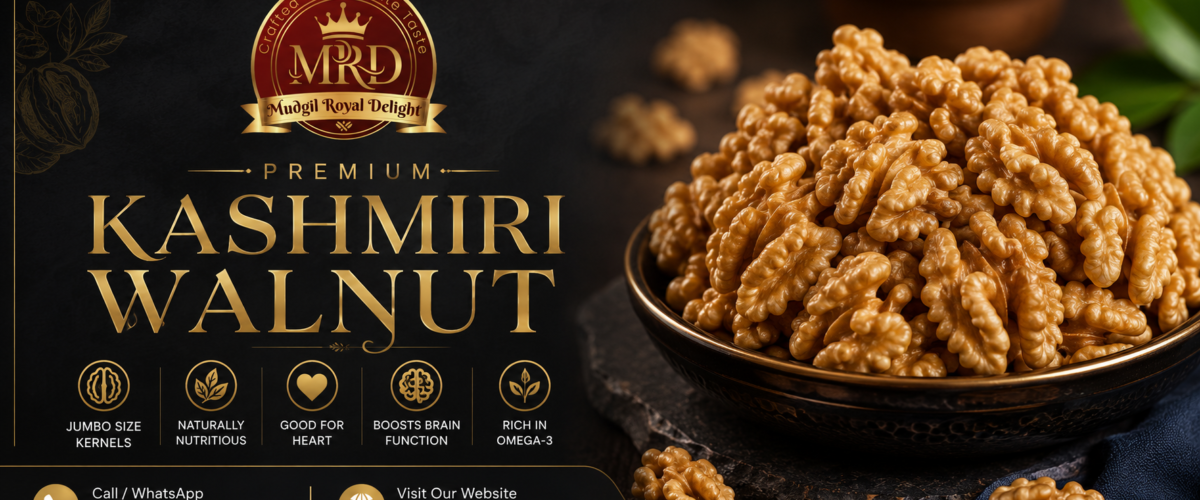
Walnuts are one of those dry fruits that have been enjoyed for generations, but Kashmiri Walnut has a special place among nut lovers because of its rich taste, delicate texture and natural nutritional value.
Whether you enjoy walnuts as a morning snack, add them to breakfast, use them in desserts or include them in everyday cooking, walnut kernels are an easy way to add healthy fats, plant-based protein, fibre, minerals and other nutrients to your diet.
At Mudgil Royal Delight (MRD Dry Fruits), we believe that buying dry fruits is not only about price. Freshness, quality, taste, proper handling and careful storage are equally important. That is why choosing good-quality Kashmiri Walnut Kernels can make a noticeable difference in both taste and overall eating experience.
In this complete guide, we will discuss what Kashmiri walnuts are, their nutritional profile, potential health benefits, important features, everyday uses, storage tips, how to identify quality walnut kernels and what to consider before buying them.
What Is Kashmiri Walnut?
Walnut is the edible seed of the walnut tree, commonly associated with the species Juglans regia. The edible portion inside the hard shell is called the walnut kernel.
In India, Kashmir is well known for walnut cultivation and walnut products. Kashmiri walnuts are appreciated for their natural flavour, characteristic texture and use in traditional as well as modern food preparations.
When the outer shell is removed, the edible portion is commonly called walnut giri or walnut kernel.
Unlike packaged snacks that may contain added salt, sugar or flavouring, plain walnut kernels can be enjoyed naturally without any preparation.
For people who want convenience, kernels are especially useful because there is no need to crack the shell before eating.
You can learn more about the difference between shelled walnuts and walnut kernels in our detailed guide on Walnut Kernels vs Whole Walnuts.
Why Are Kashmiri Walnut Kernels Popular?
There are several reasons why walnut kernels are becoming a regular part of many Indian households.
First, they are convenient. Once the shell has been removed, the kernel can be eaten directly.
Second, walnuts have a naturally rich and slightly buttery taste. Their texture also makes them suitable for both sweet and savoury recipes.
Third, walnuts provide a combination of nutrients that makes them different from many ordinary snacks.
A 28.35 g serving of walnuts provides approximately 185 calories, 4.32 g protein, 1.9 g fibre, 2.57 g ALA omega-3 fatty acids, magnesium, potassium, copper and zinc.
This nutrient density is one of the main reasons walnuts are often included in balanced eating patterns.
Nutritional Value of Walnuts
One of the most interesting features of walnuts is their fat profile.
Walnuts contain a significant amount of polyunsaturated fat, including the plant-based omega-3 fatty acid alpha-linolenic acid (ALA).
The American Heart Association also identifies walnuts as a food that is particularly rich in omega-3 fatty acids and notes that nuts provide protein, fibre, vitamins, minerals and antioxidants.
A typical 28 g serving of walnuts contains approximately:
| Nutrient | Approx. amount |
|---|---|
| Calories | 185 kcal |
| Protein | 4.3 g |
| Fibre | 1.9 g |
| Omega-3 ALA | 2.57 g |
| Magnesium | 44.8 mg |
| Potassium | 125 mg |
| Zinc | 0.88 mg |
| Copper | 0.45 mg |
These numbers are approximate and can vary depending on the variety, growing conditions, processing and serving size.
Because walnuts are calorie-dense, portion size still matters. A small handful can be enough for most people as part of a balanced diet.
10 Potential Benefits of Kashmiri Walnut
1. Supports Heart-Healthy Eating
One of the best-researched areas of walnut nutrition is cardiovascular health.
Walnuts contain polyunsaturated fats and ALA omega-3 fatty acids. Research has found that incorporating walnuts into the diet can improve certain blood lipid measures.
A systematic review of controlled trials found that walnut-enriched diets were associated with reductions in total cholesterol, LDL cholesterol and triglycerides compared with control diets.
Another systematic review found that the available evidence is consistent with walnuts improving lipid profiles and being associated with lower cardiovascular disease risk, although the strength of evidence differs across outcomes.
This does not mean walnuts are a treatment for heart disease. Rather, they can be a nutritious component of an overall heart-friendly eating pattern.
2. Provides Plant-Based Omega-3
Walnuts are particularly interesting because they provide ALA, a plant-based omega-3 fatty acid.
ALA is different from the omega-3 fats EPA and DHA found mainly in fatty fish.
The American Heart Association lists walnuts among foods that provide ALA.
For people who eat little or no fish, foods such as walnuts, flaxseeds and certain plant oils can be useful sources of ALA.
3. Supports a Nutrient-Dense Diet
Walnuts are not simply a source of fat.
They also provide protein, fibre and minerals such as magnesium, copper, zinc and potassium.
This combination makes walnut kernels a useful addition to a balanced diet.
Instead of reaching for highly processed snacks between meals, a small serving of plain walnut kernels can provide nutrients along with satisfying texture and flavour.
4. May Help Improve Overall Diet Quality
Adding nutrient-dense foods to the diet can sometimes be more useful than simply focusing on removing individual foods.
Research using dietary modelling has shown that adding walnuts to the usual diet could increase intake of nutrients such as fibre, magnesium, potassium and polyunsaturated fats.
This is one reason walnuts can fit well into breakfast, snacks and meals.
5. Provides Antioxidant Compounds
Walnuts contain naturally occurring plant compounds, including polyphenols.
These compounds contribute to the antioxidant capacity of walnuts.
However, it is better to think of walnuts as one nutritious food within a varied diet, rather than expecting one food to provide all the antioxidants the body needs.
A diet containing fruits, vegetables, whole grains, pulses, seeds and nuts provides a much broader range of beneficial plant compounds.
6. Useful Source of Plant Protein
Walnut kernels contain approximately 4.3 g of protein per 28 g serving.
They are not a complete replacement for high-protein foods, but they can contribute to overall daily protein intake.
Walnuts work particularly well when combined with other nutritious foods such as:
- Oats
- Yogurt
- Milk
- Seeds
- Fruits
- Whole grains
- Pulses
7. Contains Dietary Fibre
Fibre is another useful part of walnut nutrition.
A 28 g serving provides around 1.9 g of dietary fibre.
Fibre is important for a healthy diet and is naturally found in foods such as fruits, vegetables, legumes, whole grains, nuts and seeds.
Including a variety of these foods throughout the day is generally more beneficial than relying on a single food.
8. Convenient Energy for Busy Days
Walnuts are energy-dense because they contain a substantial amount of fat.
That makes them convenient for people who want a compact snack.
Students, working professionals and travellers can easily carry a small portion of walnut kernels and enjoy them without cooking.
For everyday snacking, however, it is better to keep portions sensible because walnuts are calorie-dense.
9. Versatile Ingredient for Everyday Cooking
One of the biggest advantages of walnut kernels is versatility.
You can eat them directly or use them in:
- Breakfast bowls
- Oatmeal
- Smoothies
- Salads
- Homemade granola
- Cakes
- Brownies
- Cookies
- Indian sweets
- Chutneys
- Gravies
- Walnut paste
- Homemade trail mixes
Their slightly crunchy texture also adds a premium feel to desserts and salads.
10. A Smart Alternative to Highly Processed Snacks
Instead of regularly choosing snacks high in added sugar, excess salt or refined ingredients, plain nuts can be a simple alternative.
The American Heart Association includes walnuts among healthier nut choices and recommends a small serving as a practical portion.
The important point is not to label walnuts as a “magic food”, but to use them as one part of an overall balanced diet.
Key Features of Premium Kashmiri Walnut Kernels
When buying Kashmiri Walnut Kernels, don’t look only at the price.
Here are some important quality features to consider.
1. Natural Appearance
Good walnut kernels should have a natural appearance rather than looking artificially coloured or excessively polished.
2. Fresh Aroma
Fresh walnuts generally have a pleasant, nutty aroma.
If walnuts smell strongly stale, oily or unpleasant, they may have started becoming rancid.
3. Crisp and Firm Texture
Fresh walnut kernels should have a pleasant bite.
Very soft, rubbery or unusually moist kernels may indicate poor storage or age.
4. Rich Natural Taste
Premium walnut kernels should have a naturally rich and mildly sweet, nutty flavour.
A strong bitter or stale taste is a warning sign.
5. Proper Storage
Walnuts contain natural oils, so storage is extremely important.
Heat, oxygen, light and moisture can affect their freshness over time.
How to Store Walnut Kernels
Proper storage can help maintain the taste and quality of walnut kernels.
For short-term use, store them in a clean, airtight container in a cool and dry place.
For longer storage, refrigeration can be a better option.
The American Heart Association recommends keeping nuts refrigerated because nuts can eventually become rancid.
Simple storage tips:
- Keep walnut kernels in an airtight container.
- Protect them from moisture.
- Avoid keeping them near heat or direct sunlight.
- Refrigerate them if storing for an extended period.
- Always check the smell and taste before consumption.
If walnuts develop a strong unpleasant smell or bitter rancid taste, it is better not to consume them.
How to Eat Kashmiri Walnut Kernels
There is no single correct way to eat walnuts.
Some people prefer eating them directly in the morning, while others add them to meals.
Here are some simple ideas.
Morning Snack
Have a small serving of walnut kernels along with breakfast.
With Oats
Chop walnuts and add them to oats with fruit and milk or yogurt.
In Smoothies
Blend walnuts with banana, milk and other ingredients for a nutrient-rich smoothie.
In Salads
Chopped walnut kernels add crunch to vegetable and fruit salads.
In Desserts
Walnuts can be used in cakes, brownies, cookies, puddings and traditional Indian sweets.
In Cooking
Walnut paste can be used in certain gravies and sauces to add texture and richness.
Are Walnuts Good for Brain Health?
Walnuts are often called a “brain food” because of their shape, nutrient profile and presence of ALA, polyunsaturated fats and antioxidant compounds.
However, it is important to avoid exaggerated claims.
Eating walnuts does not guarantee better memory or prevent neurological disease.
What we can say is that walnuts contain nutrients and plant compounds that make them a valuable part of a healthy dietary pattern, and research into their relationship with cognitive health continues. A systematic review found promising but still developing evidence in this area.
So rather than thinking of walnuts as a medicine for the brain, it is better to include them as part of a varied, nutrient-rich diet.
How Many Walnuts Should You Eat Daily?
There is no single amount that is perfect for everyone.
A commonly referenced nut serving is around 28 g, or roughly a small handful. The American Heart Association describes one ounce as a serving of whole nuts.
Your ideal quantity can depend on:
- Overall calorie requirements
- Age
- Activity level
- Existing diet
- Personal health goals
- Other foods consumed during the day
Because walnuts are energy-dense, eating large quantities is not necessary to enjoy their nutritional benefits.
If you have a medical condition or a specific dietary requirement, speak with a qualified healthcare professional or registered dietitian for personalised advice.
Who Should Be Careful With Walnuts?
Walnuts are nutritious, but they are also tree nuts and can cause allergic reactions in people with walnut allergy.
The FDA lists walnuts among the tree nuts considered major food allergens in its current guidance.
Anyone with a known walnut or tree-nut allergy should avoid walnuts unless their healthcare professional has advised otherwise.
For packaged foods, consumers should also check ingredient and allergen information carefully.
Why Freshness Matters When Buying Walnut Kernels
A walnut kernel contains natural oils, which are part of its nutritional profile but also mean that storage conditions matter.
A premium walnut is not simply one that looks large.
A better buying decision considers:
Freshness + taste + texture + cleanliness + proper storage + reliable sourcing.
At Mudgil Royal Delight, our approach is centred around carefully selected dry fruits, quality checking and hygienic packing. The brand focuses on premium dry fruits and nuts sourced from trusted suppliers and handled with attention to freshness.
You can explore the complete range through the [Mudgil Royal Delight online shop].
Kashmiri Walnut vs Other Nuts
Every nut has its own nutritional characteristics.
Almonds are popular for their vitamin E and overall nutrient profile. Cashews are known for their creamy taste and versatility. Pistachios provide protein, fibre and minerals.
Walnuts stand out particularly because of their ALA omega-3 content and polyunsaturated fat profile.
This does not mean walnuts are automatically “better” than every other nut.
The best approach is often variety.
Including different nuts and seeds in your diet can provide a wider range of nutrients and flavours.
If you enjoy different dry fruits, you can also explore our [premium dry fruits collection] for almonds, cashews, pistachios, raisins, figs and other products.
Why Choose Mudgil Royal Delight for Walnut Kernels?
At Mudgil Royal Delight (MRD Dry Fruits), our focus is on providing premium-quality dry fruits with attention to selection, freshness and hygienic packing.
Our product range includes walnuts along with almonds, cashews, pistachios, raisins, figs, dates, seeds and other dry fruits.
For customers looking for convenience, walnut kernels are especially useful because they are ready to eat and easy to add to everyday meals.
You can explore walnuts and other nuts at Mudgil Royal Delight