


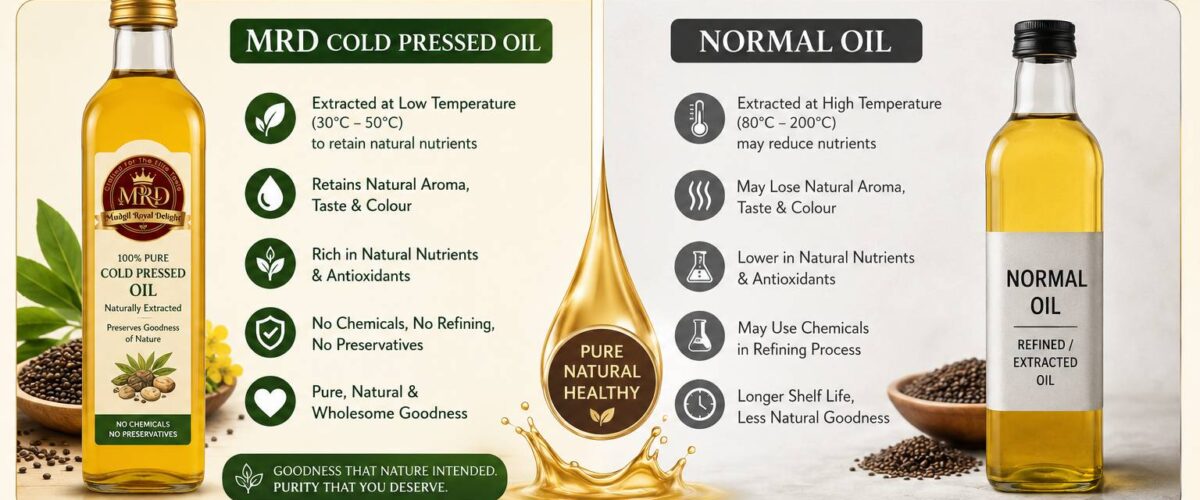
When choosing cooking oil, most people focus only on price or brand. However, the extraction process plays a much bigger role in determining the oil’s nutritional value, taste, aroma, and overall health benefits.
One of the most common questions people ask today is:
“Which is better: Cold Pressed Oil or Normal Expeller Oil?”
The answer depends on how the oil is extracted, how much heat is used during processing, and how many natural nutrients remain in the final product.
At Mudgil Royal Delight (MRD), we believe that informed customers make healthier choices. In this comprehensive guide, we’ll compare Cold Pressed Oils and Normal Expeller Oils across every important factor so you can confidently choose the right oil for your family.
What is Cold Pressed Oil?
Cold Pressed Oil is extracted from seeds or nuts using a slow mechanical pressing process without exposing the oil to excessive heat. Generally, the extraction temperature remains below 45–50°C, helping preserve naturally occurring nutrients.
This traditional extraction method has been used for centuries and is gaining popularity worldwide because it retains:
- Natural antioxidants
- Essential fatty acids
- Vitamin E
- Phytosterols
- Natural aroma and flavor
- Original color of the oil
Unlike heavily processed oils, cold pressed oils undergo minimal processing, making them one of the most natural cooking oil options available today.
What is Normal Expeller Oil?
Normal Expeller Oil is also mechanically extracted but uses higher pressure and higher temperatures to maximize oil yield.
During extraction, temperatures often rise above 90°C and can exceed 120°C, depending on the equipment and production process.
Because of this heat:
- Some heat-sensitive nutrients are reduced.
- Natural aroma becomes milder.
- Oil extraction efficiency increases.
- Production cost becomes lower.
Many commercial cooking oils available in the market are produced using this method because it offers higher output and faster production.
Cold Pressed Oil vs Normal Expeller Oil: Quick Comparison
| Feature | Cold Pressed Oil | Normal Expeller Oil |
|---|---|---|
| Extraction Temperature | Below 50°C | Usually Above 90°C |
| Nutrient Retention | Excellent | Moderate |
| Vitamin E | Higher | Lower |
| Natural Antioxidants | Preserved | Partially Reduced |
| Aroma | Rich & Natural | Mild |
| Taste | Authentic | Neutral |
| Processing | Minimal | Higher |
| Oil Yield | Lower | Higher |
| Shelf Life | Slightly Shorter | Longer |
| Cost | Premium | More Affordable |
| Best For | Healthy Lifestyle | Everyday Commercial Use |
How Extraction Temperature Affects Oil Quality
The biggest difference between cold pressed and normal expeller oils is heat.
Many beneficial plant compounds are sensitive to temperature. Excessive heat can gradually reduce:
- Tocopherols (Vitamin E)
- Polyphenols
- Natural enzymes
- Antioxidants
- Aroma compounds
Cold pressing minimizes this loss, allowing more naturally occurring compounds to remain in the oil.
This is one of the primary reasons why nutrition experts often recommend cold pressed oils for individuals seeking minimally processed foods.
Nutritional Comparison
Although both oils originate from the same seeds or nuts, the extraction method significantly influences nutritional preservation.
Cold Pressed Oil Contains More:
- Natural Vitamin E
- Healthy fats
- Plant sterols
- Polyphenols
- Natural antioxidants
Normal Expeller Oil May Have:
- Reduced antioxidant levels
- Lower natural aroma
- Fewer heat-sensitive nutrients
It’s important to note that both oils still contain healthy fats, but cold pressed oils generally preserve more naturally occurring compounds.
Taste and Aroma
One of the easiest ways to identify cold pressed oil is its aroma.
Because minimal heat is used, cold pressed oils retain the natural fragrance of the original seed.
For example:
- Cold Pressed Mustard Oil has a stronger traditional aroma.
- Cold Pressed Groundnut Oil offers a rich nutty flavor.
- Cold Pressed Sesame Oil provides a naturally roasted seed fragrance.
- Cold Pressed Almond Oil maintains its pleasant nut aroma.
Normal expeller oils usually have a milder smell because higher temperatures reduce many volatile aromatic compounds.
Which Oil is Better for Cooking?
Both oils can be used for cooking.
However, their ideal applications differ.
Cold Pressed Oils are Ideal For
- Everyday home cooking
- Light sautéing
- Traditional Indian recipes
- Salad dressings
- Marinades
- Finishing oils
Normal Expeller Oils are Suitable For
- Large-scale commercial cooking
- Restaurants
- Food manufacturing
- High-volume production
Families looking for natural nutrition generally prefer cold pressed oils despite their slightly higher cost.
Health Benefits of Cold Pressed Oils
Cold pressed oils have become increasingly popular among health-conscious consumers because they offer a more natural nutritional profile.
Potential advantages include:
- Better preservation of antioxidants
- Naturally occurring Vitamin E
- Minimal processing
- Authentic flavor
- No unnecessary chemical processing (when produced traditionally)
- Rich natural aroma
- Better nutritional integrity
Why Cold Pressed Oils Cost More
Many consumers wonder why cold pressed oils are more expensive.
Several reasons explain the price difference:
Lower Oil Yield
Cold pressing extracts less oil from the same quantity of seeds.
Slower Production
The machinery operates at a slower speed to minimize heat generation.
Better Raw Material
Premium manufacturers often use carefully selected seeds and nuts.
Higher Quality Standards
Maintaining low temperatures requires more controlled production.
These factors increase production costs but also contribute to higher-quality oil.
Common Myths About Cold Pressed Oils
Myth 1: Cold Pressed Oil Has No Heat During Extraction
False.
Some heat is naturally generated due to friction, but temperatures remain significantly lower than conventional expeller methods.
Myth 2: Expeller Oil is Unhealthy
Not necessarily.
Good-quality expeller oil is still mechanically extracted and can be suitable for regular cooking. However, it may contain fewer naturally preserved nutrients compared to cold pressed oil.
Myth 3: Cold Pressed Oils Cannot Be Used for Cooking
Incorrect.
Most cold pressed oils are perfectly suitable for everyday cooking when used appropriately.
Which Oil Should You Choose?
Your decision depends on your priorities.
Choose Cold Pressed Oil if you want:
- Maximum nutrition
- Natural flavor
- Traditional extraction
- Minimal processing
- Premium quality
- Better nutrient retention
Choose Normal Expeller Oil if your priority is:
- Lower price
- Higher production efficiency
- Commercial cooking
- Large-scale food preparation
For families focused on long-term wellness, cold pressed oils are generally considered the better choice because of their natural nutritional profile and minimal processing.
Why More Families Are Switching to Cold Pressed Oils
Over the past few years, awareness about food quality has increased significantly.
Consumers now read labels more carefully and prefer foods that are:
- Less processed
- Free from unnecessary additives
- Traditionally prepared
- Rich in natural nutrients
Cold pressed oils align well with these preferences, making them one of the fastest-growing categories in the healthy cooking oil market.
Explore Premium Cold Pressed Oils from Mudgil Royal Delight
At Mudgil Royal Delight (MRD), we believe that purity begins with the finest ingredients and careful extraction methods.
Our range of premium cold pressed oils is crafted to preserve the natural goodness of every seed and nut, delivering authentic taste, rich aroma, and superior quality for your kitchen.
Discover Our Premium Collection
- Cold Pressed Mustard Oil
- Cold Pressed Groundnut Oil
- Cold Pressed Sesame Oil
- Cold Pressed Coconut Oil
- Cold Pressed Almond Oil
- Cold Pressed Flaxseed Oil (Coming Soon)
Each bottle is produced with a focus on purity, freshness, and traditional extraction techniques to help you make healthier cooking choices.
Frequently Asked Questions (FAQs)
Is cold pressed oil healthier than normal expeller oil?
Cold pressed oil generally retains more naturally occurring antioxidants, Vitamin E, and plant compounds because it is extracted at lower temperatures.
Why is cold pressed oil expensive?
It requires slower extraction, produces lower oil yield, and involves stricter quality control, resulting in higher production costs.
Can I use cold pressed oil for daily cooking?
Yes. Most cold pressed oils are suitable for regular household cooking and traditional Indian recipes.
Does cold pressed oil contain chemicals?
Pure cold pressed oils are mechanically extracted without chemical solvents. Always choose a trusted manufacturer that clearly states its extraction process.
Which cold pressed oil is best?
The best choice depends on your cooking style and nutritional preferences. Mustard, sesame, groundnut, coconut, and almond oils each offer unique flavors and culinary applications.
Final Thoughts
Choosing the right cooking oil is not just about taste—it is about making an informed decision for your family’s long-term well-being.
At Mudgil Royal Delight (MRD), we carefully select premium-quality seeds and nuts before extracting our Cold Pressed Oils through traditional methods. In addition, we focus on purity, freshness, and quality control at every stage of production so that every bottle delivers the natural goodness you expect.
Investing in high-quality Cold Pressed Oils is more than a lifestyle choice—it is a commitment to healthier cooking and better nutrition. Make every meal richer in flavor, purity, and tradition by choosing Mudgil Royal Delight’s Premium Cold Pressed Oils.